- We Are Cable Management Solutions !Hire Us
- Anand Nagar, Ambernath (East),


Cable Tray Manufacturer in Ahmedabad
Cable Tray Manufacturer and Supplier in Ahmedabad
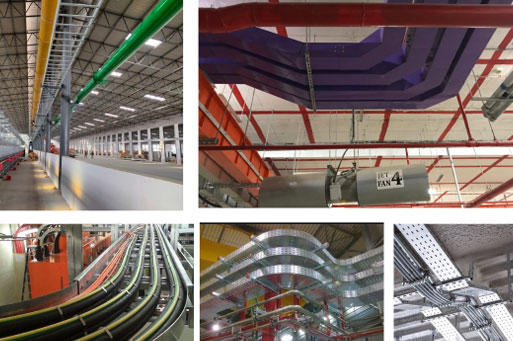
Industrial belts served: Sanand GIDC · Changodar · Naroda GIDC · Vatva GIDC · Odhav · Kadi · Bavla
Ahmedabad is one of the most competitive cable tray markets in India, with established local fabricators in Naroda, Vatva and Odhav. Winning work here is about specification and documentation rather than price alone.
The Sanand and Becharaji automotive corridor and the Vatva chemical belt pull in opposite directions on finish — one priced on volume and standard sizes, the other specified zone by zone against process exposure.
Mitool Equipments Pvt. Ltd. manufactures cable management systems at MIDC Additional Ambernath in Thane district and supplies them throughout Ahmedabad. We quote against your cable schedule and tray layout rather than a generic size list — send the drawing with the finish required and the quotation comes back with tray sizes, bends, reducers, coupler plates and supports listed line by line, with a dispatch date.
Cable Tray Range Supplied in Ahmedabad
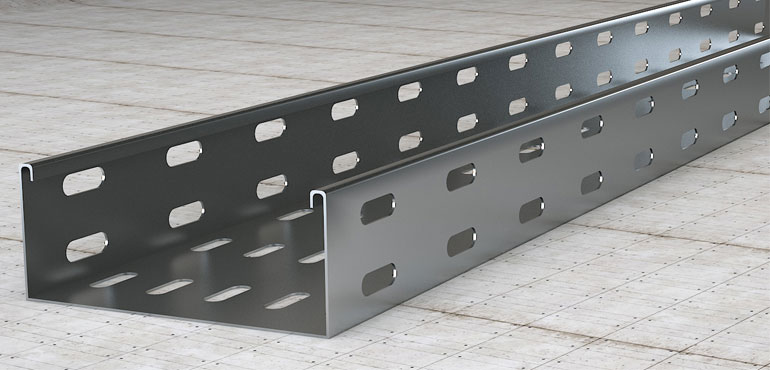
Perforated Cable Tray
Slotted base that lets cable heat escape and allows clamping and hold-down at any point along the run. The highest-volume tray type on most Ahmedabad projects.
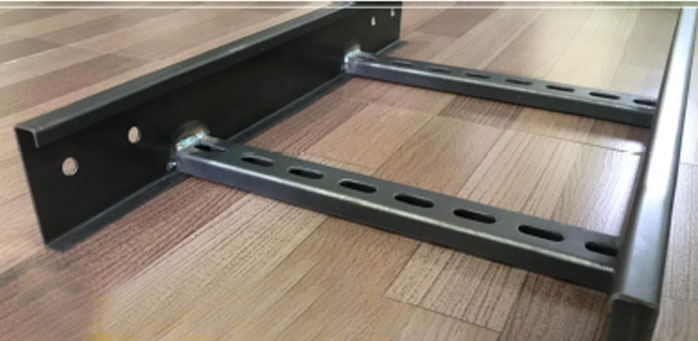
Ladder Cable Tray
Open rung construction for the heavy end of the cable schedule — feeds to motors, presses, compressors and switchrooms, on wider support centres.
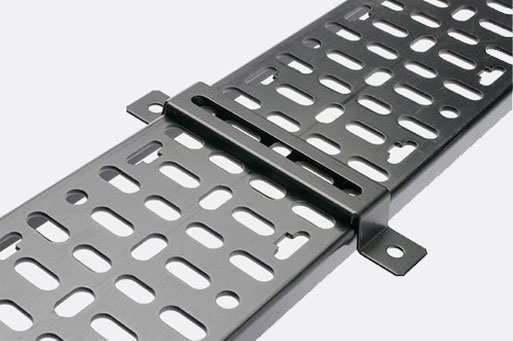
Bolted Rung Ladder Type Cable Tray
Bolted rather than welded rungs, so spacing can be reset at site and individual rungs replaced without cutting the run apart.
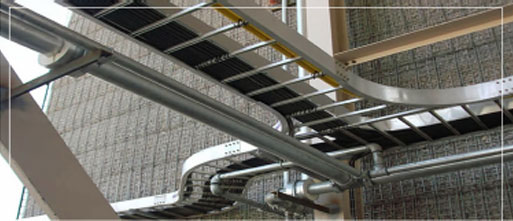
Stainless Steel Cable Tray
Supplied in SS304 and SS316 where washdown, process chemistry or chloride exposure rules out a zinc coating.
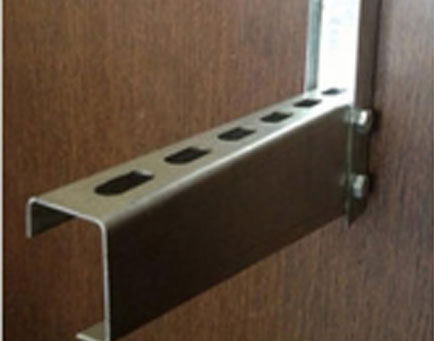
Wall Mounted Cable Tray Support
Wall and structure brackets sized to carry the tray and the cable load above it, in matching material and finish.
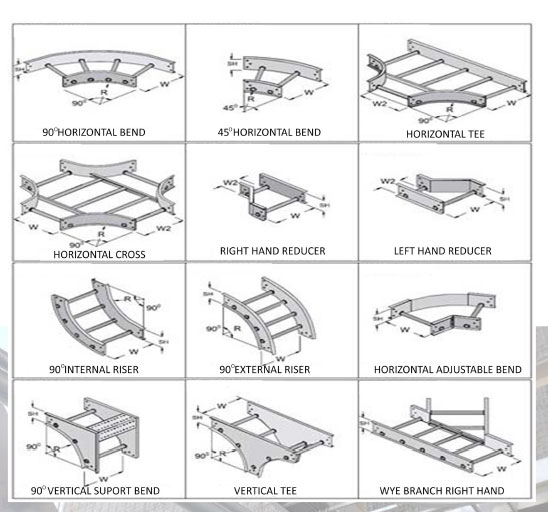
Perforated Cable Tray Accessories
The fittings that make a run continuous: bends, risers, reducers, tees, crosses, coupler plates and clamps, all in the tray's own grade.
What Each Ahmedabad Sector Specifies
A starting point for tray selection by application. Final selection follows your cable schedule, fill ratio and support spacing.
| Sector and belt | Typical tray | Usual finish |
|---|---|---|
| Automotive and components Sanand GIDC, Becharaji corridor | Ladder tray for press and paint shop power, perforated for control | Pre-galvanized indoors, hot dip for yards |
| Chemicals and dyes Vatva GIDC, Naroda, Odhav | Ladder tray for main runs, perforated for instrumentation | SS316 in process areas, hot dip elsewhere |
| Pharmaceutical Changodar, Sanand, Bavla | Stainless perforated tray in classified areas | SS304; SS316 for aggressive cleaning chemistry |
| Textiles and processing Narol, Odhav | Perforated tray in humid, lint-heavy halls | Hot dip galvanized |
| Ceramics and engineering Kadi, Mehsana corridor | Ladder tray for kiln and machine power | Hot dip galvanized |
| Solar across Gujarat | Perforated tray for DC strings, ladder for AC runs | Hot dip galvanized — very high UV load |
Choosing the Right Finish for Ahmedabad
Ahmedabad runs hot and dry for most of the year, with high UV, large day-to-night temperature swings and airborne dust. Corrosion is slower here than on the coast, but thermal movement and dust loading become the things worth designing around.
Where the boundaries fall is a Ahmedabad-specific judgement rather than a general rule. Roof level is the line that matters. Surface temperatures on an exposed roof here run far above ambient, and anything routed up there belongs in a different specification band. Across a site at Sanand GIDC, Changodar or Bavla that usually means the tray schedule is split into two or three finish bands rather than quoted at a single grade, and the saving on the lower band normally pays for the upgrade on the higher one.
Hot dip galvanizing to IS 2629 and IS 4759 is still the right specification outdoors. The driver is not rain but ultraviolet exposure and the thermal cycling that works at coating and fasteners over years of 40°C-plus summers — which is also why Ahmedabad rooftop and ground-mount solar installations call for it almost without exception.
Stainless steel is driven by process rather than weather here, so SS304 covers pharmaceutical, food and washdown duty, and SS316 is reserved for genuine chloride exposure. In a dry inland climate there is rarely a corrosion case for SS316.
On Ahmedabad projects specifically, the runs that get under-specified are rooftop and yard routes priced on the assumption that low rainfall means low risk. It is ultraviolet exposure and thermal cycling that do the damage here, not water. It is worth walking the route on the drawing zone by zone before the order goes in — on a automotive and componentssanand gidc, becharaji corridor job around Sanand GIDC or Changodar, that exercise usually changes two or three line items and costs nothing at enquiry stage.
Two Ahmedabad-specific points worth putting on the drawing: allow for thermal expansion at couplers on long outdoor runs, because the temperature swing is larger than most standard details assume; and remember that a perforated base helps dust fall through rather than collecting on the tray, which matters more here than in a humid climate.
Manufacturing Range
| Raw material | Mild steel, stainless steel (SS304 / SS316), aluminium |
| Finish options | Pre-galvanized, hot dip galvanized, powder coated, self-finish |
| Length | 2500 mm – 3000 mm standard; 1000 mm – 3000 mm available |
| Width | 50 mm – 1200 mm (tray); up to 2000 mm on supports |
| Height / side rail | 15 mm – 150 mm |
| Thickness | 1.2 mm – 3 mm |
| Bend | 15 mm – 25 mm |
| Strength class | Light, medium and heavy duty |
| Accessories | Horizontal and vertical bends, reducers, tee and cross sections, coupler plates, clamps, wall mounted supports |
| Supply capacity | 1500 – 2000 metres per week |
| Packing | Loose, nested or in sets as per site requirement |
Tray in India is normally specified to IS 14927 — Part 1 for general requirements, Part 2 for trays and ladder systems including load class and span — with IEC 61537 cited as the international equivalent on multinational projects. Galvanizing is called out as IS 277 for pre-galvanized sheet or IS 2629 and IS 4759 for hot dip. Confirm all three at enquiry stage: standard, load class and support spacing. They have to agree with each other, and settling that before the order costs nothing.
Delivery to Ahmedabad
Our works at MIDC Additional Ambernath is about 520 km from Ahmedabad. Deliveries run to Sanand GIDC, Changodar, Naroda GIDC, Vatva GIDC, Odhav, Kadi, Bavla. Trays are bundled and strapped for site handling, and accessories can be packed separately by zone where a project is erected in phases. For larger site packages we can stage dispatch against your erection schedule rather than delivering the full quantity at once.
Send your cable tray schedule for a Ahmedabad project
Share the tray layout or bill of quantities with sizes, finish and accessories. You get back a line-by-line quotation with dispatch timing.
Request a Quotation Call +91-251-2621925Cable Tray Questions from Ahmedabad Buyers
Do you deliver cable trays across Ahmedabad?
Yes. Our works is at MIDC Additional Ambernath, Thane, about 520 km from Ahmedabad, and we dispatch to all its industrial belts including Sanand GIDC, Changodar, Naroda GIDC, Vatva GIDC, Odhav. Trays are supplied in standard 2500 mm and 3000 mm lengths, bundled and strapped for site handling.
Does the dry climate at Ahmedabad mean a lighter finish is acceptable?
Indoors, yes — pre-galvanized to IS 277 performs well in low humidity. Outdoors, hot dip galvanized to IS 2629 is still recommended, because the governing factors are ultraviolet exposure and thermal cycling rather than rainfall.
What should be allowed for on long outdoor runs at Ahmedabad?
Thermal expansion at coupler joints. The day-to-night and summer-to-winter swing at Ahmedabad is larger than many standard support details assume, so expansion provision on long outdoor runs is worth confirming at the design stage.
How long does an order take?
Quantity and finish drive it. Hot dip galvanizing is an extra processing stage after fabrication, and stainless is made to order, so both take longer than pre-galvanized. Share the bill of quantities and the dispatch date is confirmed alongside the quotation.
Do you supply test or compliance documentation?
Yes, against the standard your specification names. IS 14927 Part 2 is the usual Indian reference and IEC 61537 the international one. We need the load class and the support spacing from the drawing as well, because the three have to be consistent.
Which tray sizes are available?
50 mm to 1200 mm width, 15 mm to 150 mm side rail height, 1.2 mm to 3 mm thickness and 2500 mm or 3000 mm standard length, in light, medium and heavy duty, with supports to 2000 mm. Non-standard sizes are made to order from your drawing.