- We Are Cable Management Solutions !Hire Us
- Anand Nagar, Ambernath (East),


Cable Tray Manufacturer in Ankleshwar & Dahej
Cable Tray Manufacturer and Supplier in Ankleshwar & Dahej
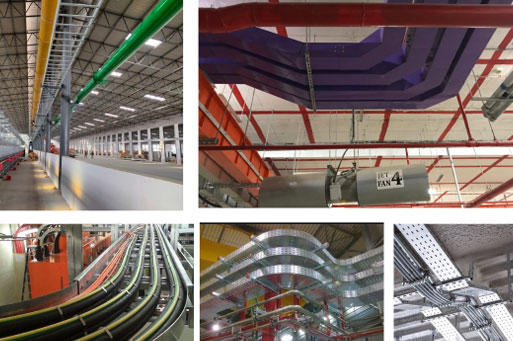
Industrial belts served: Ankleshwar GIDC · Panoli GIDC · Jhagadia GIDC · Dahej SEZ · Vilayat GIDC · Bharuch
The Ankleshwar–Panoli–Jhagadia–Dahej corridor is probably the highest cable tray consumption per project anywhere in India, and also the least forgiving of a generic specification.
Acid vapour, solvent carry-over and chloride-bearing process streams mean the grade decision is made per block. It is routine on these projects for SS316 inside the process area, hot dip galvanized on the outdoor rack and pre-galvanized only in the admin and canteen buildings.
Mitool Equipments Pvt. Ltd. manufactures cable management systems at MIDC Additional Ambernath in Thane district and supplies them throughout Ankleshwar & Dahej. We quote against your cable schedule and tray layout rather than a generic size list — send the drawing with the finish required and the quotation comes back with tray sizes, bends, reducers, coupler plates and supports listed line by line, with a dispatch date.
Cable Tray Range Supplied in Ankleshwar & Dahej
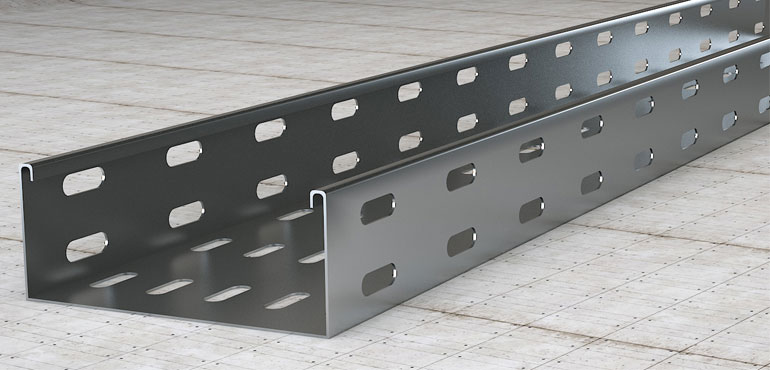
Perforated Cable Tray
Ventilated base for heat dissipation. The default choice for control, instrumentation and mixed cabling in Ankleshwar and Dahej plants, fit-outs and commercial buildings.
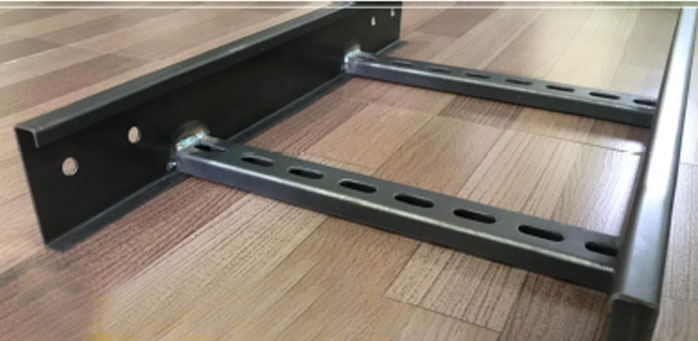
Ladder Cable Tray
Two side rails with welded rungs. Used for heavy power runs where cable weight, ventilation and long support spans matter.
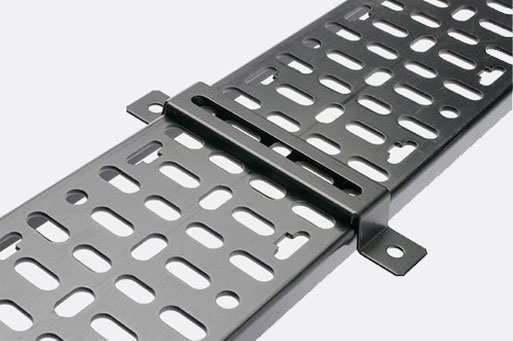
Bolted Rung Ladder Type Cable Tray
Rungs bolted rather than welded, so rung spacing can be adjusted at site and a damaged rung replaced without cutting into the run.
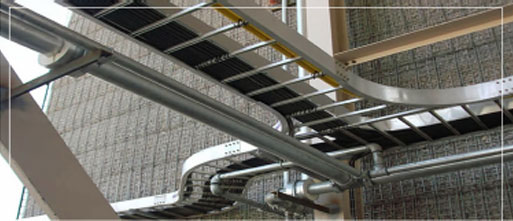
Stainless Steel Cable Tray
SS304 and SS316 for pharmaceutical, food, chemical and washdown areas where galvanized finishes will not hold up.
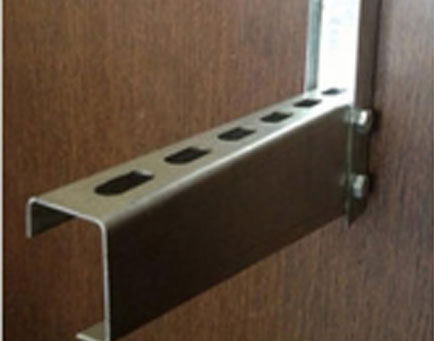
Wall Mounted Cable Tray Support
Brackets and supports fixed to wall or structure to carry the tray run, supplied in mild steel, stainless steel and aluminium.
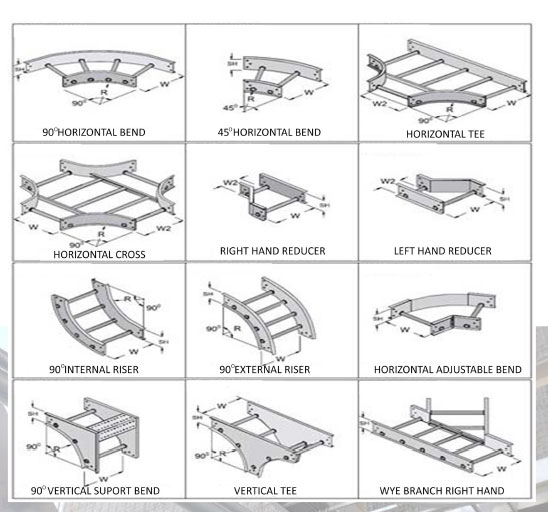
Perforated Cable Tray Accessories
Horizontal and vertical bends, inside and outside risers, reducers, tee and cross sections, coupler plates and clamps in matching material and finish.
What Each Ankleshwar & Dahej Sector Specifies
A starting point for tray selection by application. Final selection follows your cable schedule, fill ratio and support spacing.
| Sector and belt | Typical tray | Usual finish |
|---|---|---|
| Bulk chemicals and intermediates Ankleshwar GIDC, Panoli, Jhagadia | Ladder tray for main runs, perforated for instrumentation | SS316 in process areas, hot dip galvanized elsewhere |
| Petrochemicals and PCPIR Dahej SEZ, Vilayat | Ladder tray on pipe racks, perforated for field instruments | SS316 in process; hot dip galvanized on racks |
| Pharmaceutical and API Ankleshwar, Panoli | Stainless perforated tray in classified and washdown areas | SS304; SS316 where process chlorides apply |
| Agrochemicals and dyes Jhagadia, Bharuch | Ladder and perforated tray in acidic atmospheres | SS316; hot dip galvanized outdoors |
| Port and terminals Dahej | Ladder tray on outdoor and jetty structures | Hot dip galvanized; SS316 jetty side |
Choosing the Right Finish for Ankleshwar & Dahej
Ankleshwar and Dahej is a process environment first and a weather environment second. Acid vapour, solvent carry-over and flue gas do more damage to a tray run here than rain ever will, and the finish has to be chosen against the process rather than the climate.
Where the boundaries fall is a Ankleshwar and Dahej-specific judgement rather than a general rule. The process zone boundary is the line that matters, and it rarely coincides with a wall. Vapour travels, and the finish should follow the exposure rather than the floor plan. Across a site at Ankleshwar GIDC, Panoli GIDC or Bharuch that usually means the tray schedule is split into two or three finish bands rather than quoted at a single grade, and the saving on the lower band normally pays for the upgrade on the higher one.
Pre-galvanized sheet to IS 277 has a limited role at Ankleshwar and Dahej. It is fine for offices, control rooms and utility buildings, but zinc is attacked quickly by acidic atmospheres, so it should not be carried into process areas on cost grounds.
Stainless steel is where the decision actually matters. SS316 is the correct grade inside process areas at Ankleshwar and Dahej wherever chlorides or acidic condensate are present; SS304 is reserved for washdown and clean utility areas. This single line item usually drives most of the cost difference between two tray quotations, so it is worth settling with your process engineer rather than defaulting either way.
On Ankleshwar and Dahej projects specifically, the runs that get under-specified are the ones crossing a zone boundary — a feed leaving the utility block and entering the process area keeps the utility-block finish all the way through, and fails at the far end first. It is worth walking the route on the drawing zone by zone before the order goes in — on a bulk chemicals and intermediatesankleshwar gidc, panoli, jhagadia job around Ankleshwar GIDC or Panoli GIDC, that exercise usually changes two or three line items and costs nothing at enquiry stage.
Powder coating adds little in a chemical atmosphere and can trap condensate against the substrate. Where colour coding of tray runs is required by the plant standard, apply it over hot dip galvanizing, never over bare steel.
Manufacturing Range
| Raw material | Mild steel, stainless steel (SS304 / SS316), aluminium |
| Finish options | Pre-galvanized, hot dip galvanized, powder coated, self-finish |
| Length | 2500 mm – 3000 mm standard; 1000 mm – 3000 mm available |
| Width | 50 mm – 1200 mm (tray); up to 2000 mm on supports |
| Height / side rail | 15 mm – 150 mm |
| Thickness | 1.2 mm – 3 mm |
| Bend | 15 mm – 25 mm |
| Strength class | Light, medium and heavy duty |
| Accessories | Horizontal and vertical bends, reducers, tee and cross sections, coupler plates, clamps, wall mounted supports |
| Supply capacity | 1500 – 2000 metres per week |
| Packing | Loose, nested or in sets as per site requirement |
IS 14927 Part 1 sets the general requirements for cable trunking and ducting systems; Part 2 covers cable trays and cable ladder systems, including load class and permissible span, and IEC 61537 is its international equivalent. Galvanizing is specified as IS 277 for pre-galvanized sheet or IS 2629 and IS 4759 for hot dip. Send us the standard, load class and support spacing from your consultant's drawing and the quotation will be built against them. The failure we see most often is tray arriving at site correct in every dimension but supplied to a lower load class than the support spacing on the drawing assumes.
Delivery to Ankleshwar & Dahej
Our works at MIDC Additional Ambernath is about 390 km from Ankleshwar and Dahej. Deliveries run to Ankleshwar GIDC, Panoli GIDC, Jhagadia GIDC, Dahej SEZ, Vilayat GIDC, Bharuch. Trays are bundled and strapped for site handling, and accessories can be packed separately by zone where a project is erected in phases. For larger site packages we can stage dispatch against your erection schedule rather than delivering the full quantity at once.
Send your cable tray schedule for a Ankleshwar & Dahej project
Share the tray layout or bill of quantities with sizes, finish and accessories. You get back a line-by-line quotation with dispatch timing.
Request a Quotation Call +91-251-2621925Cable Tray Questions from Ankleshwar & Dahej Buyers
Do you deliver cable trays across Ankleshwar & Dahej?
Yes. Our works is at MIDC Additional Ambernath, Thane, about 390 km from Ankleshwar and Dahej, and we dispatch to all its industrial belts including Ankleshwar GIDC, Panoli GIDC, Jhagadia GIDC, Dahej SEZ, Vilayat GIDC. Trays are supplied in standard 2500 mm and 3000 mm lengths, bundled and strapped for site handling.
Which cable tray grade suits a chemical plant at Ankleshwar and Dahej?
Inside process areas where chlorides or acidic condensate are present, SS316 is the correct grade. SS304 is adequate for washdown and clean utility areas. Hot dip galvanized to IS 2629 covers outdoor racks, tank farms and utility corridors, and pre-galvanized should be kept to offices and control rooms.
Why is zinc coating not recommended in process areas?
Zinc corrodes quickly in acidic atmospheres, so a galvanized tray that performs well on an outdoor rack can fail early a short distance away inside a process block. That is why the finish at Ankleshwar and Dahej is chosen zone by zone rather than once for the whole plant.
How quickly can an order be dispatched?
It depends on the quantity and the finish. Pre-galvanized material moves fastest; hot dip galvanizing adds a processing stage, and stainless tray is made to order rather than held in stock. Give us the quantities and finish and the dispatch date is confirmed with the price.
Will the trays carry documentation against a named standard?
Yes. Tell us which standard applies — usually IS 14927 Part 2, or IEC 61537 on internationally written projects — along with the load class and support spacing, and the quotation and documentation are prepared against it.
What is the size range you manufacture?
Widths from 50 mm to 1200 mm, side rail heights from 15 mm to 150 mm, thicknesses from 1.2 mm to 3 mm, and standard lengths of 2500 mm and 3000 mm, in light, medium and heavy duty. Supports are available up to 2000 mm wide.